

Tune in as we get REAL about working in schools, serving students, and advocating for our roles. You've never heard school counseling like this.
School for School Counselors Podcast



We LOVE helping school counselors! From interviewing to learning about all the the
things they don't teach in grad school like 504, MTSS, and behavior intervention, we will help you become the most empowered & educated counselor-expert you can be!
SHARE:


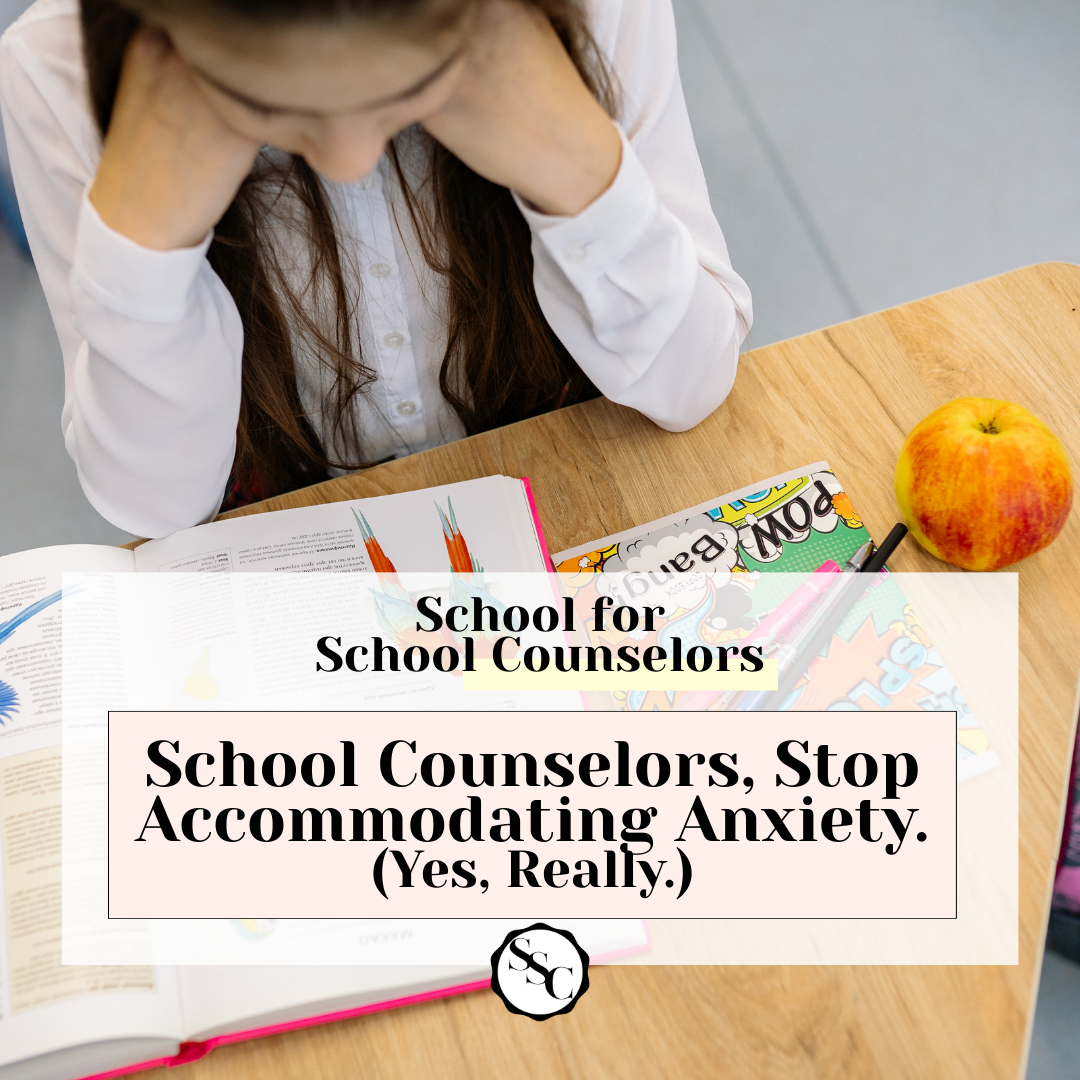
School Counselors, Stop Accommodating Anxiety. (Yes, Really.)
Filed under:
Stop Accommodating Anxiety and Start Building Brave Students
Anxious students pull at every instinct we have as school counselors. We want to protect them. We want to reduce their distress. We want to be kind. Sometimes, though, kindness gets confused with comfort. And comfort, when it comes to anxiety, can quietly work against the very students we are trying to help.
Many of the most common anxiety accommodations used in schools today feel compassionate on the surface. Late arrivals. Skipping presentations. Unlimited safe passes. Reduced expectations with no plan to rebuild. They lower distress in the moment, which makes them feel successful.
What they often do not do is help students get better.
Why Anxiety Accommodations Backfire
Anxiety is not maintained by fear alone. It is maintained by avoidance. When a student avoids a feared situation and feels relief, the brain learns a powerful lesson. That situation must have been dangerous. Avoidance worked. Do it again next time.
Over time, the anxiety grows stronger, not weaker. The student becomes more dependent on external supports and less confident in their own ability to cope. Research consistently shows that higher levels of accommodation predict greater anxiety severity, increased functional impairment, and poorer long-term outcomes.
In schools, avoidance-based accommodations are everywhere. Most are well intentioned. Almost all are reinforced by time pressure, staffing shortages, and a desire to keep the day moving.
The problem is not effort. It is the mechanism.
The Question That Changes Everything
There is one simple question that can help you evaluate any anxiety accommodation. Does this help the student do the thing, or does it help the student avoid the thing?
If the accommodation makes avoidance easier, anxiety is likely being reinforced. If it helps the student engage with support, structure, and gradual challenge, growth becomes possible.
This does not mean throwing students into the deep end. It means replacing escape routes with scaffolds.
From Avoidance to Capacity Building
Avoidance-based supports often provide short-term relief without long-term improvement. Capacity-building supports do the opposite. They feel harder at first, but they teach students that anxiety is tolerable and temporary.
Graduated exposure plans, coached practice, predictable routines, and language that normalizes discomfort all help students learn a critical skill. They can feel anxious and still function. This is not about eliminating anxiety. It is about teaching students how to move through it.
When students experience mastery in small, supported steps, their identity shifts. They stop seeing themselves as incapable or fragile. They start seeing themselves as brave, capable, and resilient.
A Different Outcome Is Possible
One fourth grader could not walk through the school doors without gagging or vomiting. The compassionate response would have been to change the environment to remove the trigger. A different approach was taken.
Instead of avoidance, a graduated plan was built. First standing near the curb. Then approaching the door. Then entering the building. Over time, the student learned that anxiety did not control the outcome. He did.
Six weeks later, he walked into school on his own.
Not without anxiety. Through it. That distinction matters.
The Discomfort Is the Work
School counselors are not here to remove all discomfort. We are here to help students build the capacity to handle it. When accommodations reinforce avoidance, they teach learned helplessness. When supports are designed to build skills, they teach learned effectiveness.
This work takes time. It requires confidence, clinical judgment, and often difficult conversations with adults who want immediate relief.
It is still the work.
This week’s School for School Counselors podcast dives deeper into the research behind anxiety accommodations and walks through how to rethink them without violating ethical or legal obligations.
If this post challenged your thinking, the School for School Counselors Hub, the blog, and the Mastermind are places counselors return to when they need clarity, practical tools, and support that reflects the real complexity of this work. You do not have to do this alone, and you do not have to rely on outdated approaches that no longer serve your students.









Very helpful!