Tune in as we get REAL about working in schools, serving students, and advocating for our roles. You've never heard school counseling like this.
School for School Counselors Podcast



We LOVE helping school counselors! From interviewing to learning about all the the
things they don't teach in grad school like 504, MTSS, and behavior intervention, we will help you become the most empowered & educated counselor-expert you can be!
SHARE:


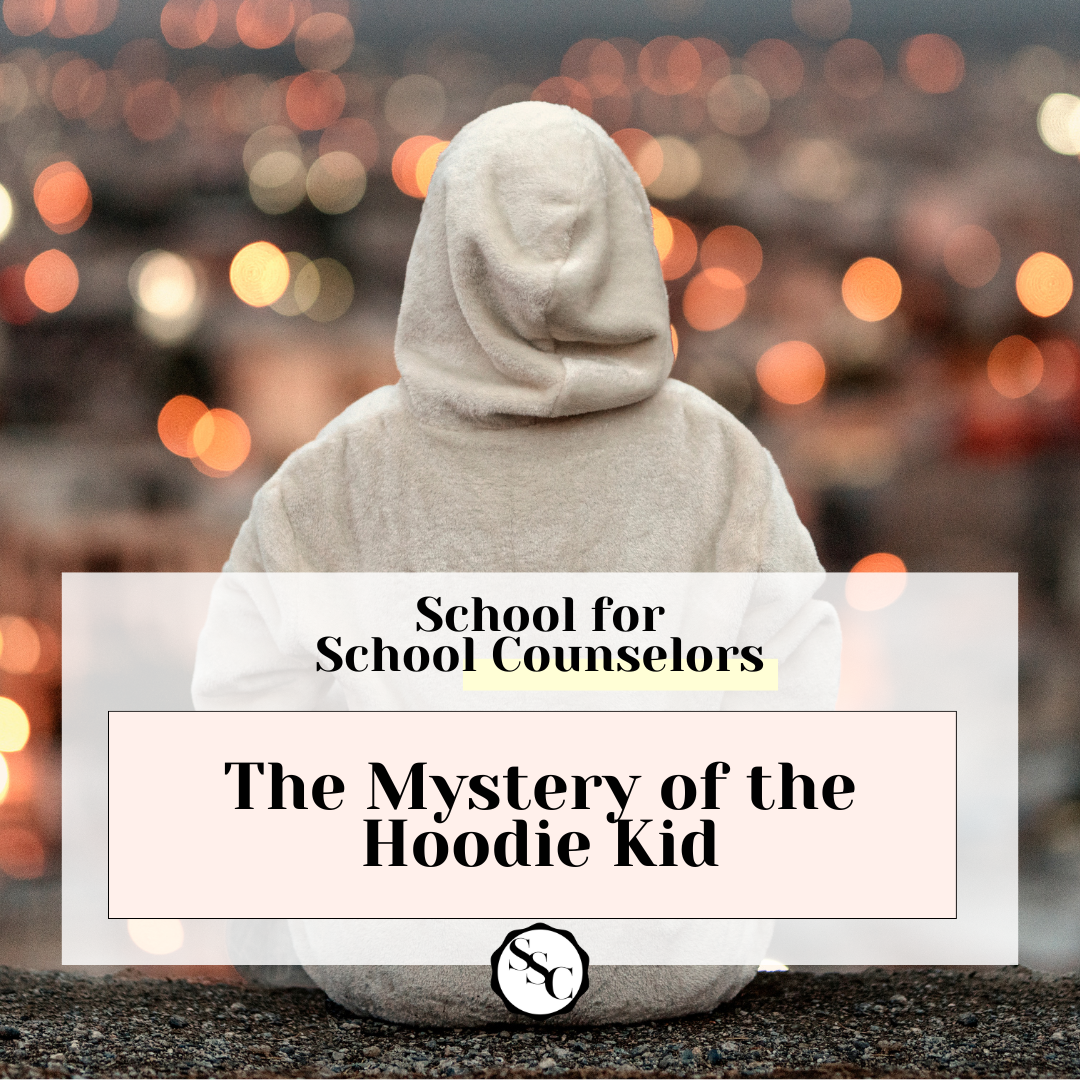
The Mystery of the Hoodie Kid
Filed under:
Every counselor has seen it:
The kid in a hoodie when it’s 98 degrees.
The kid in basketball shorts during a freeze warning.
The kid who’s bundled like it’s a blizzard… in May.
And every adult has the same questions:
What are they thinking? Why won’t they dress for the weather? Are they just looking for attention?
But when we slow down long enough to look beyond the clothing, something much more important comes into focus. These choices are almost never random and almost never about fashion. They’re communication. When we learn to “read” that communication, we see students with fresh eyes.
Hoodies as Regulation: When Clothing Creates Safety
Let’s start with the explanation most adults overlook: regulation.
For many students, that hood isn’t a style statement – it’s survival.
School hallways can feel like sensory obstacle courses: fluorescent lights, echoing hall noise, unpredictable movement, smells from every direction, and constant social pressure
For a dysregulated nervous system, the world feels too loud, too bright, too much. Pulling up a hood creates a small, contained space, almost like a portable weighted blanket. Research backs this up. Deep pressure (like snug clothing or weighted blankets) can help reduce sensory overload and bring the nervous system back toward a calmer baseline. So when a student wraps themselves up, it may not be an attitude problem. It may be their only tool for getting through noisy transitions, crowded hallways, or a difficult day.
Once you see it that way, annoyance melts into empathy pretty fast.
Autonomy: A Tiny Way to Take Back Control
Adolescence is basically a crash course in having almost zero control over anything. Adults decide the bell schedule, the dress code, assignments, cafeteria rules, seating chart, pace of the day and more!
So what do kids do?
They hang onto the one thing they can control: their clothing.
A hoodie becomes a quiet act of autonomy – decision that is actually theirs. That’s why a “Just take your hood down” conversation can turn into a surprising power struggle. It’s not about the hoodie anymore. It’s about dignity. When counselors step in with curiosity rather than correction, the dynamic shifts.
Suddenly the student isn’t defending a piece of fabric – they’re being seen.
Identity and Belonging: What Students Want You to Know
Sometimes clothing isn’t about comfort or control—it’s about identity and belonging. Adolescence is a season of asking: Who am I? Who are my people? Where do I fit?
A hoodie might represent: a favorite music artist, a gamer community, a sports team, a cultural or faith group, a friend group they want to belong to…. Or it might be camouflage – an attempt to disappear just enough to feel safe.
Clothing often becomes a quiet billboard for belonging.
And for many students, that sense of belonging is everything.
When a Hoodie Is More Than a Hoodie
Some students don’t fit any clear pattern. Their choices seem random. Their clothing changes suddenly. Or it becomes very consistent overnight.
That’s when counselors shift into assessment mode:
– Is this a pattern or a one-off?
– Is clothing paired with changes in mood, grades, or friendships?
– Does it seem linked to stress, trauma, or social pressure?
– Is body image playing a role right now?
This isn’t about diagnosing a problem from a sweatshirt.
It’s about noticing changes early and responding with curiosity rather than judgment.
A Simple Framework: The CLOAK Method
The next time you see a student wearing something unexpected, try this mindset shift:
C – Curiosity Over Certainty
What might this choice be doing for the student?
L – Look for Patterns
One weird day is a quirk. Four weeks of the same behavior is a clue.
O – Open the Conversation
In a non-judgmental moment: “Does your hoodie help you get through the day in some way?”
A – Assess Function
Is it regulation? Autonomy? Identity? Belonging? Body safety?
Gender expression?
K – Keep an Eye on Red Flags
Watch for sudden shifts, concealing clothing paired with withdrawal, or big changes after trauma.
This method keeps us in a place of curiosity rather than control—exactly where our best work happens.
Seeing Students With New Eyes
When you walk into the hallway tomorrow and see a dozen hoodies, you’ll see something different:
Not defiance.
Not stubbornness.
Not “that kid again.”
You’ll see regulation, autonomy, identity, belonging, stress, self-protection, communication
When students feel seen, not corrected, relationships deepen. Trust grows. Little by little, they don’t need the armor as much around you.
That’s fluency – and it’s one of your most powerful tools as a school counselor.
Want More Support Like This?
If you love diving deep into the real “why” behind student behavior—and translating it into practical support—stick around the blog for more articles just like this one.
And if you’re craving community, clarity, and research-backed strategies you can actually use, the School for School Counselors Hub and Mastermind are here to support you all year long.
You don’t have to do this work alone. ?